
Minimizing wrinkling through Wrinkling Simulation
Wrinkling simulation is a powerful tool for the early identification and optimization of potential weaknesses in seat cover design. It allows targeted prediction of areas with an increased risk of wrinkling and enables designers to minimize these risks by adjusting the design and fastening methods. This ensures that seat covers remain taut and evenly stretched.
Technology and methodology of Wrinkling Simulation
The Wrinkling Option in CASIMIR/Automotive provides an optimized workflow to accurately predict and minimize the risk of wrinkling in seat systems. A wide range of factors are considered:
Material Properties: Based on the specialized material cards developed in the Material Manager of CASIMIR/Automotive, the properties of the individual patches are modelled, considering the material orientation.
Assembly Simulation: The fastening of the covers to the foam (using clips and/or wires) and to the structure is semi-automatically generated according to the real production process. Additional tools assist in the efficient creation of contacts and the adjustment of manufacturing parameters for the individual areas.
Based on the results of the cover simulation, the risk of wrinkling can be derived using various criteria. By optimizing the fastening points and pre-tension, as well as the geometry of the patches, the risk of wrinkling can be minimized.
Combining Overbuild and Wrinkling Simulation for optimized vehicle seats
The combination of overbuild and wrinkling simulation provides the foundation for the optimal design and manufacturing of vehicle seats. This allows for adjustments in material selection, pattern design, and production processes, enabling the design specifications to be achieved with optimal fit and aesthetics. The results also serve as a basis for further simulations regarding wear or aging behaviour.
OUR AUTOMOTIVE DISTRIBUTOR ON THE CHINESE MARKET
Address: Building T4, Lujiazui Digital World · Wisdom Ridge, Lane 969 Yuqiao Road, Pudong New Area, Shanghai
Phone: +86 18064081644

Please contact us personally
________
We will be happy to support you in solving your tasks relating to virtual seat development, seating comfort and virtual human models.

EXPERT IN ENGINEERING SOLUTIONS FOR ENERGY, AUTOMOTIVE AND DIGITAL TRANSFORMATION
Responsible for the business development and positioning of engineering solutions within the Energy & Infrastructure Business Unit, with a focus on earthquake engineering for the energy, electrical engineering and infrastructure sectors, as well as within the Automotive Business Unit
Over 10 years of international B2B experience with complex engineering and software solutions in Automotive and Wind Energy – particularly for OEMs and Tier 1 suppliers at the intersection of technology, market needs and business models across Asia and North America
M.Sc. in Business Administration and Engineering, with a focus on Automation Engineering and Product Management, complemented by additional training, including Value Analysis
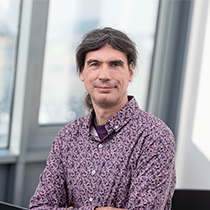
GLOBALLY RECOGNISED EXPERT IN SEATING COMFORT AND WHOLE-BODY VIBRATION
Product Manager for Virtual Seating Comfort with CASIMIR
25 years of professional experience in seating comfort and occupational health and safety
Speaker at renowned international conferences on seating comfort and whole-body vibration
Contributor to standardisation working groups, including the revision of ISO 2631-5
Core developer of the internationally used seating comfort tool CASIMIR
Degree in General Mechanical Engineering

DEVELOPMENT ENGINEER (DIGITAL PRODUCTS)
Holds a Master of Science degree in Computational Mechanics of Materials and Structures from the University of Stuttgart
Responsible for the development of CASIMIR/Automotive (Wölfel’s software tool for seating comfort analysis and optimisation)
Provides close customer support and technical consulting
Optimises customer processes in the field of seating comfort
Conducts simulations in seat development with a focus on H-point, static and dynamic seating comfort, as well as the numerical modelling of human bodies
EXPERT IN ENGINEERING SOLUTIONS FOR ENERGY, AUTOMOTIVE AND DIGITAL TRANSFORMATION
Responsible for the business development and positioning of engineering solutions within the Energy & Infrastructure Business Unit, with a focus on earthquake engineering for the energy, electrical engineering and infrastructure sectors, as well as within the Automotive Business Unit
Over 10 years of international B2B experience with complex engineering and software solutions in Automotive and Wind Energy – particularly for OEMs and Tier 1 suppliers at the intersection of technology, market needs and business models across Asia and North America
M.Sc. in Business Administration and Engineering, with a focus on Automation Engineering and Product Management, complemented by additional training, including Value Analysis
GLOBALLY RECOGNISED EXPERT IN SEATING COMFORT AND WHOLE-BODY VIBRATION
Product Manager for Virtual Seating Comfort with CASIMIR
25 years of professional experience in seating comfort and occupational health and safety
Speaker at renowned international conferences on seating comfort and whole-body vibration
Contributor to standardisation working groups, including the revision of ISO 2631-5
Core developer of the internationally used seating comfort tool CASIMIR
Degree in General Mechanical Engineering
DEVELOPMENT ENGINEER (DIGITAL PRODUCTS)
Holds a Master of Science degree in Computational Mechanics of Materials and Structures from the University of Stuttgart
Responsible for the development of CASIMIR/Automotive (Wölfel’s software tool for seating comfort analysis and optimisation)
Provides close customer support and technical consulting
Optimises customer processes in the field of seating comfort
Conducts simulations in seat development with a focus on H-point, static and dynamic seating comfort, as well as the numerical modelling of human bodies
